Charting seasonal tourism flows and their direct effects on live table minimum adjustments at regional casino properties
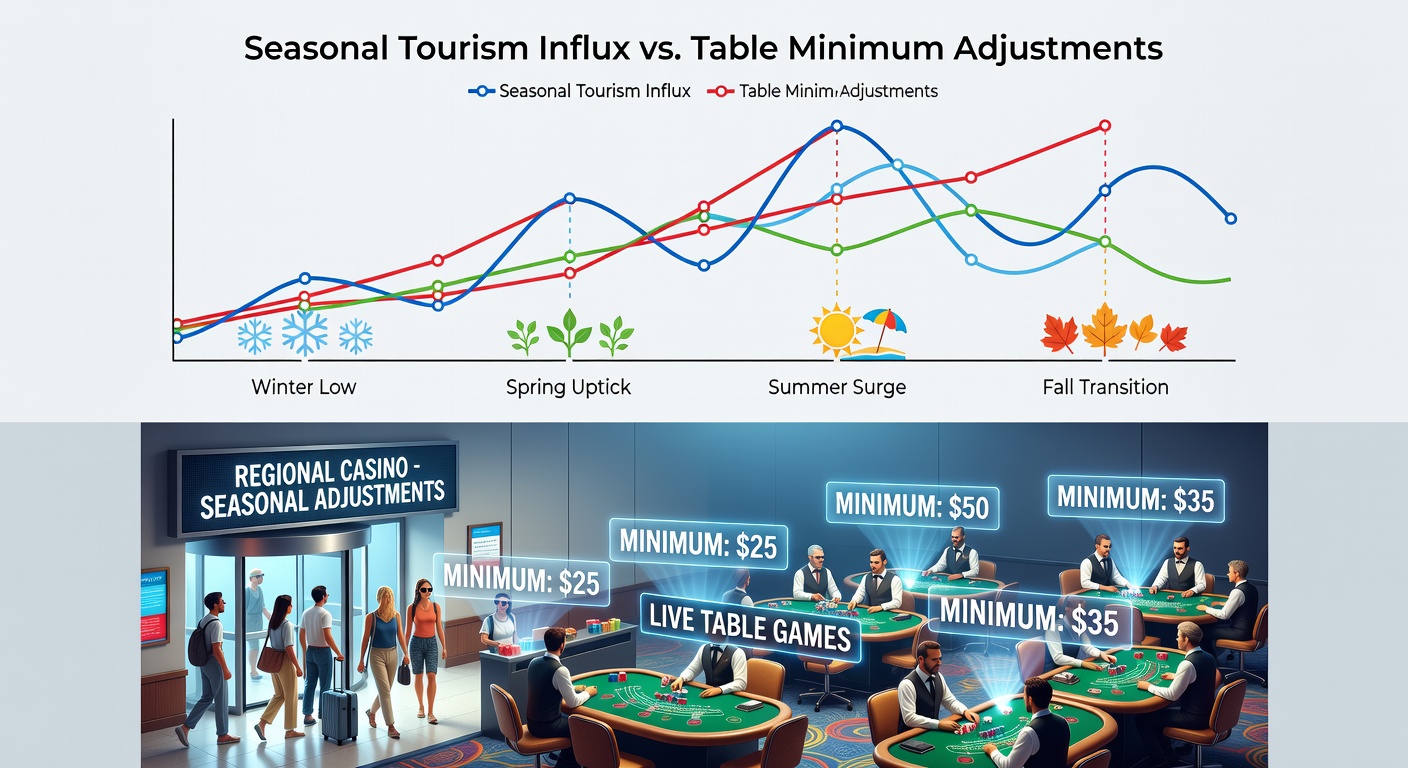 Regional casino operators track tourism patterns closely because visitor volumes shift dramatically with seasons and those changes trigger direct adjustments to live table minimums. Summer months bring influxes to coastal and mountain destinations while winter draws crowds to warmer climates and ski-adjacent properties; each cycle prompts floor managers to recalibrate betting thresholds on blackjack, roulette and baccarat tables to balance revenue goals against player traffic. Data compiled by state gaming agencies shows minimums often rise 25 to 75 percent during peak arrival periods as properties capitalize on higher demand. Off-season reductions follow the same logic in reverse, with many regional venues lowering $15 and $25 tables to $10 or even $5 to maintain volume when tourist counts drop. These adjustments occur on predictable calendars yet still require real-time monitoring because weather events or economic shifts can accelerate or delay the expected flows.
Documented tourism cycles and table minimum responses
Research from multiple jurisdictions illustrates the connection. Properties in the northeastern United States typically increase blackjack minimums from $10 to $25 beginning Memorial Day weekend and hold those levels through Labor Day; the same venues then revert to lower thresholds once leaf-peeping traffic subsides. In contrast, desert properties in the southwest experience their strongest visitation from October through April and raise roulette minimums accordingly while summer months see widespread $5 table promotions aimed at local residents.
Analysts at the Nevada Gaming Control Board have recorded consistent patterns across smaller markets outside Las Vegas where seasonal swings reach 40 percent or more in monthly visitor counts. Those swings correlate with minimum changes implemented within 48 hours of occupancy reports crossing internal thresholds. Casino managers rely on hotel data, airport arrivals and highway traffic counts rather than waiting for full monthly tallies before posting new table limits.
Regional examples from North America and Australia
Take the case of properties along the Mississippi Gulf Coast. Summer hurricane season reduces tourism while spring break and fall shoulder months produce measurable spikes; operators respond by adjusting craps minimums upward during those windows and then easing them when occupancy falls below 60 percent. Similar logic applies at Australian regional casinos where the Bureau of Infrastructure and Transport Research Economics tracks domestic holiday travel that peaks in December and January; venues in Queensland and New South Wales raise baccarat minimums during those months before lowering them once school holidays conclude.
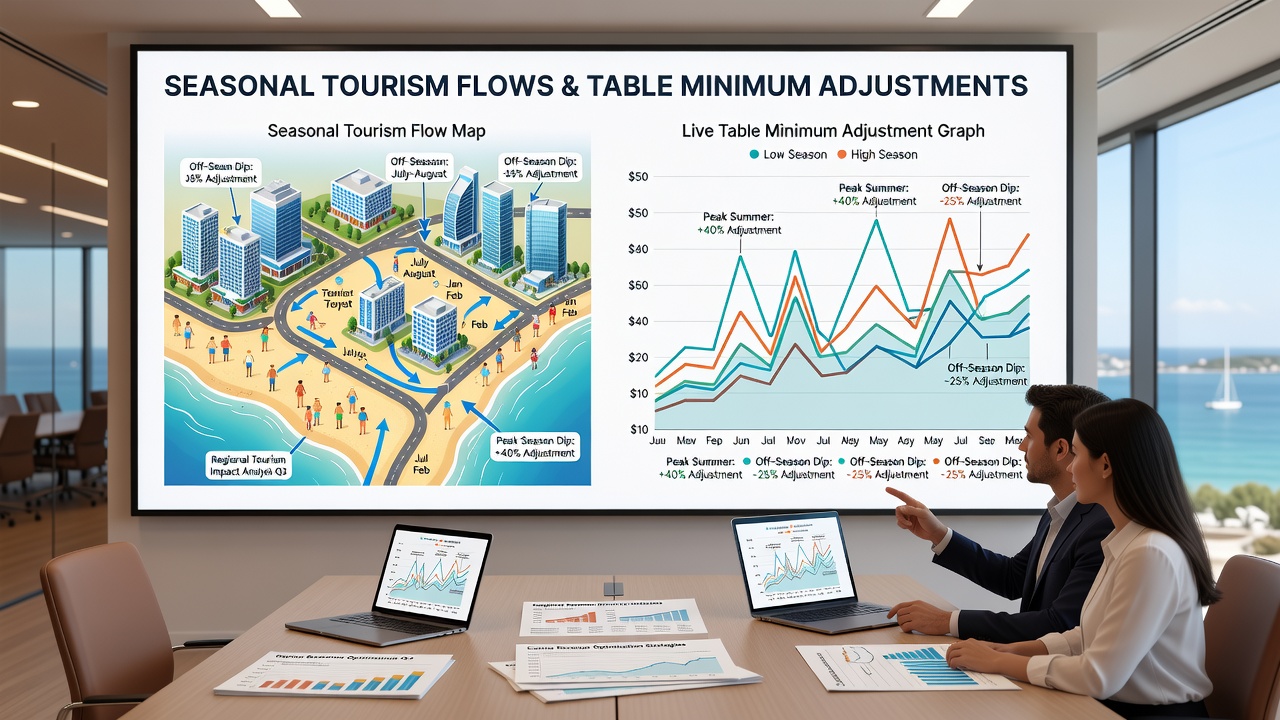
Canadian provincial casinos near major ski resorts demonstrate another variation. Winter tourism surges prompt progressive minimum increases on live tables while summer months see aggressive reductions to compete with outdoor recreation alternatives. Operators coordinate these changes with provincial regulators who require advance notice only when minimums cross certain multiples of the posted maximums.
Operational mechanics behind the adjustments
Floor supervisors receive daily briefings that combine tourism forecasts with current table occupancy rates. When projected visitor arrivals exceed historical averages by 15 percent or more, minimums move upward in stages rather than all at once to avoid abrupt player migration to competing venues. Conversely, sustained periods below target occupancy trigger staged reductions, often paired with promotional signage and dealer announcements.
Electronic table signage allows these updates to appear instantly across the pit, while pit bosses monitor player reaction through average bet size and table fill frequency. Properties that adjust too aggressively risk losing regular local players who form the backbone of off-season revenue, yet those that adjust too slowly leave potential income on the table during influx periods. The balance requires precise timing informed by multiple data streams.
June 2026 outlook and ongoing monitoring
Forward-looking models prepared by tourism boards and gaming associations project continued alignment between seasonal flows and table minimum policies through June 2026. Early indicators from booking platforms already show elevated summer reservations at mountain and lakeside properties, prompting preliminary discussions about minimum increases scheduled for late May. At the same time, venues in secondary markets are preparing contingency plans for possible extended shoulder seasons driven by shifting travel preferences.
Those preparing for June 2026 note that hybrid remote-work patterns have begun to flatten some traditional peaks, yet core holiday windows remain dominant drivers. Casino operators therefore maintain flexible policies that allow mid-month recalibrations when actual arrivals deviate from forecasts by more than 10 percent.
Conclusion
Seasonal tourism flows and live table minimum adjustments remain tightly linked at regional casino properties because visitor volume directly shapes revenue optimization strategies. Operators across multiple continents apply the same core principle: raise thresholds when demand supports higher play and lower them when traffic requires incentives to sustain activity. Continuous data collection from transportation, lodging and economic sources enables these decisions to stay responsive rather than reactive, preserving both profitability during peaks and accessibility during slower periods.