How Fingerprint Recognition Is Streamlining Account Verification and Deposit Flows Across Multi-State Sportsbook Platforms
Bianca Hartmann · Aug 6, 2026
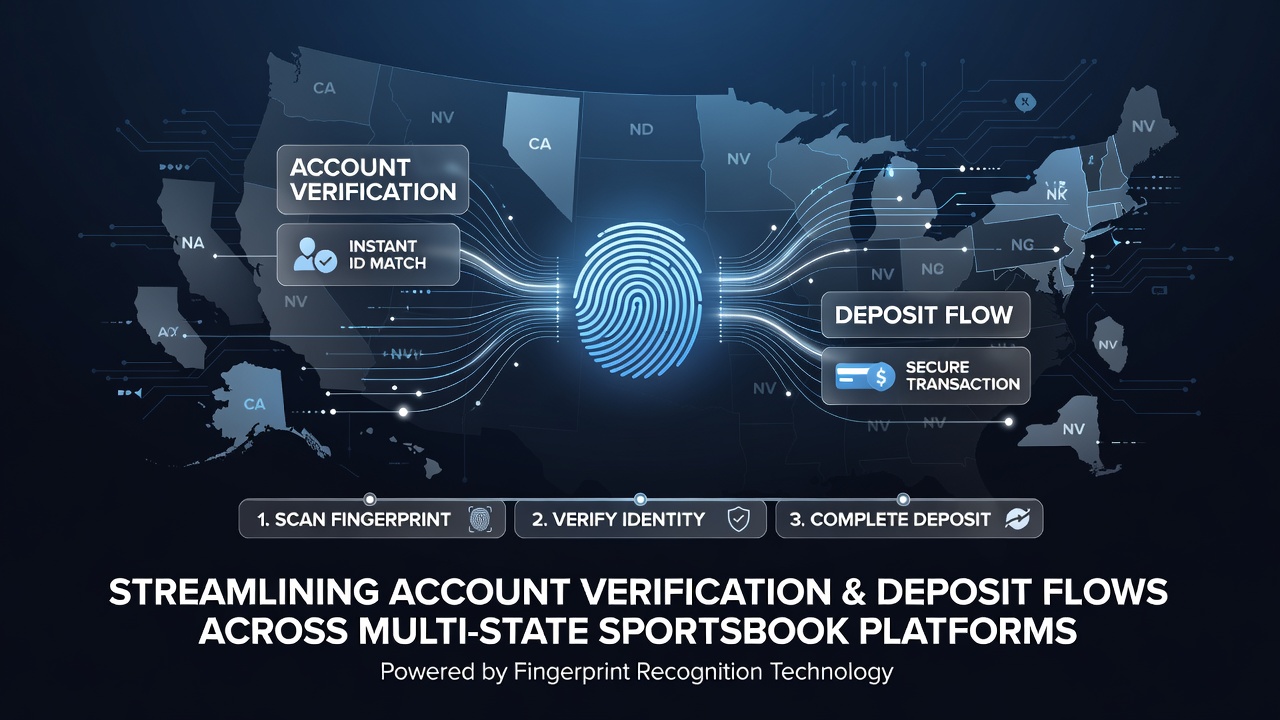
How Fingerprint Recognition Is Streamlining Account Verification and Deposit Flows Across Multi-State Sportsbook Platforms
Platforms operating across multiple states have integrated fingerprint recognition into their systems to handle account verification and deposit processing with greater consistency. This approach aligns with varying regulatory requirements while reducing reliance on manual document uploads and password resets that often slow down user onboarding. Data from operators shows that biometric methods cut verification times from several minutes to under 30 seconds in many cases, particularly when users cross state lines and encounter different compliance checks.
Core Mechanics of Fingerprint Integration
Fingerprint sensors on smartphones capture ridge patterns and convert them into encrypted templates that platforms store securely on their servers or through third-party biometric providers. Once enrolled, users authenticate logins and approve transactions without re-entering personal details each time. Systems compare live scans against stored templates using algorithms that account for minor variations in pressure or angle, maintaining accuracy rates above 99 percent according to technical evaluations shared by device manufacturers. This setup supports seamless movement between state-specific apps while complying with individual licensing rules that mandate identity confirmation before any financial activity.
Impact on Account Verification Procedures
Multi-state operators apply fingerprint checks during initial registration and subsequent logins to meet know-your-customer standards that differ by jurisdiction. In states with stricter rules, the biometric layer supplements government ID uploads, while in others it serves as the primary method after one-time setup. Observers note that this hybrid model reduces abandonment rates during signup because users avoid repeated form filling when switching between platforms licensed in neighboring states. As of August 2026, several major operators reported verification completion rates exceeding 85 percent on first attempt when fingerprint enrollment occurred at account creation.
Deposit Flow Enhancements
Deposit processes benefit directly from fingerprint authorization because platforms can link the biometric template to payment methods without storing sensitive card details locally. Users confirm transfers through a simple scan, which triggers backend checks against banking partners and state-mandated transaction limits. Research from gaming technology firms indicates that average deposit completion times dropped by 40 percent after fingerprint rollout on cross-state apps, with fewer interruptions from security prompts. The same systems flag suspicious patterns by requiring additional verification only when template matches fall below threshold levels, preserving speed for routine activity.

Regulatory Navigation Across Jurisdictions
Operators must synchronize fingerprint protocols with rules from bodies such as the Illinois Gaming Board and the Malta Gaming Authority when serving users in overlapping markets. Fingerprint templates receive the same data protection treatment as other personal identifiers, requiring encryption standards that satisfy each regulator's audits. Platforms often maintain separate enrollment flows for states with unique age or location verification mandates, yet the underlying biometric technology remains consistent to avoid duplicative user friction. Those who have examined deployment logs find that unified backend systems allow real-time updates when one state revises its guidelines without disrupting service elsewhere.
Security and Data Handling Practices
Encrypted templates replace raw fingerprint images on company servers, limiting exposure if breaches occur. Multi-state platforms route authentication requests through centralized security hubs that apply uniform hashing while logging access attempts for compliance reporting. Studies conducted by university research teams have examined template irreversibility, confirming that reconstruction of original prints remains computationally infeasible under current standards. Operators conduct periodic third-party penetration tests focused on biometric subsystems, with results incorporated into annual licensing renewals across active states.
Adoption Patterns Observed in 2026
By August 2026, adoption had expanded to include both established national brands and regional operators entering new markets through partnerships. Smaller platforms adopted white-label biometric modules to match larger competitors without building custom infrastructure. Usage data collected across devices reveals higher engagement on tablets and phones equipped with ultrasonic sensors compared to older optical models, prompting some operators to recommend hardware upgrades in their support documentation. Cross-state users particularly value the consistency, as a single enrolled fingerprint grants access to accounts licensed in multiple jurisdictions without repeated identity prompts.
Conclusion
Fingerprint recognition continues to reshape verification and deposit sequences for multi-state sportsbook operations by providing a standardized yet adaptable layer that fits diverse regulatory environments. Continued refinements in sensor technology and template management support ongoing expansion while maintaining alignment with evolving compliance expectations. Platforms that have implemented these systems demonstrate measurable gains in processing efficiency and user retention across their licensed territories.