La Partage in Roulette: The French Twist That Saves Half Your Even-Money Losses
La Partage in Roulette: The French Twist That Saves Half Your Even-Money Losses
Understanding La Partage: Roulette's Player-Friendly Rule
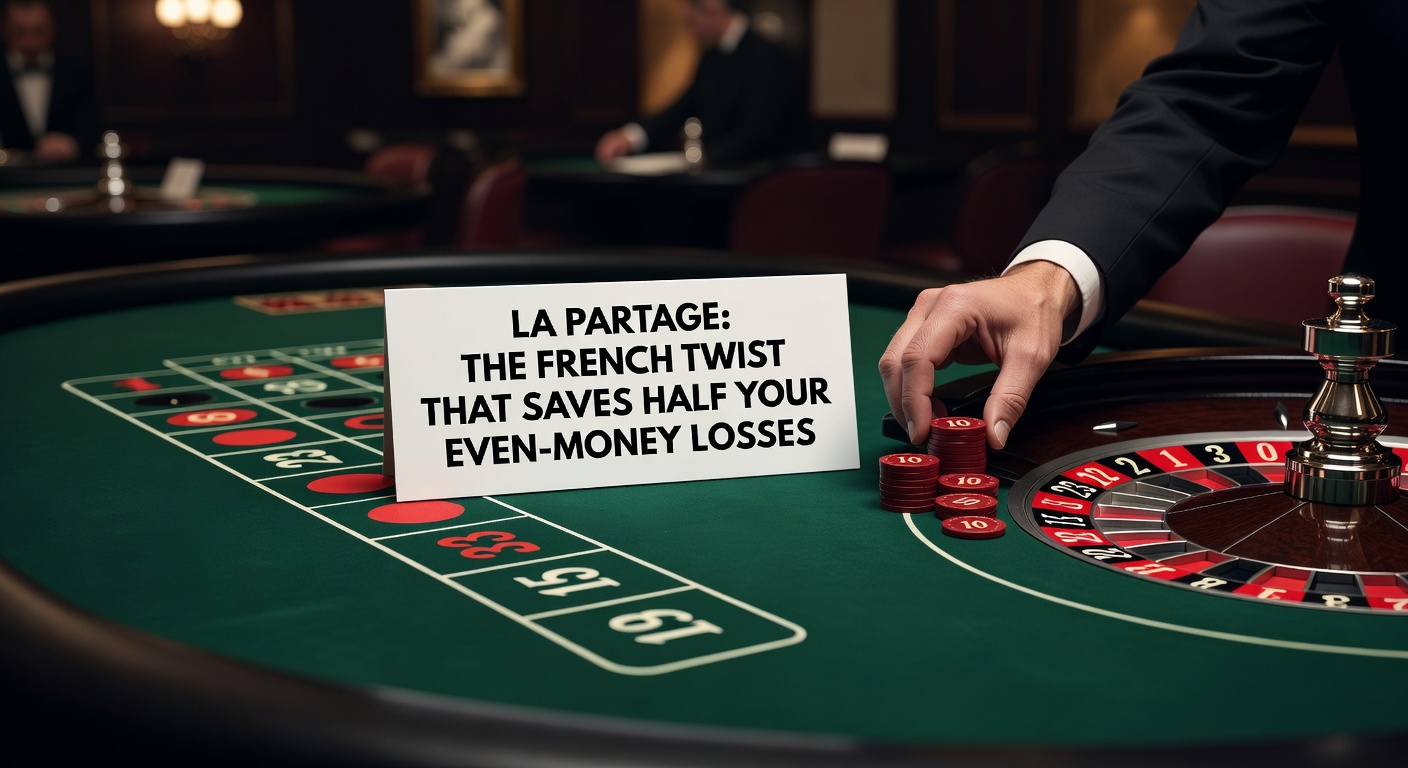
Roulette wheels have spun for centuries, captivating players with their mix of chance and strategy; yet, one rule sets French Roulette apart from its American and European cousins, offering a lifeline on even-money bets when zero hits. La Partage, that French innovation, kicks in precisely during those tense moments, returning half the stake to players wagering on red or black, odd or even, or high (19-36) versus low (1-18), so instead of a total wipeout on zero, losses shrink dramatically. Data from casino floor analytics shows this adjustment transforms the game's math, drawing in veterans who chase lower house edges without altering the wheel's familiar rhythm.
Experts who've dissected roulette variants note how La Partage emerged as a response to player complaints about the zero's sting, particularly in high-stakes European salons where fairness became a selling point; turns out, this rule isn't just cosmetic, as figures reveal it halves the effective disadvantage on those core bets. Players often discover its value mid-session, watching chips return unexpectedly while the game rolls on seamlessly.
Origins in French Gaming History
French Roulette traces back to teh 18th century, when Francois and Louis Blanc refined the wheel by dropping the double zero, slashing the house edge and birthing modern single-zero play; La Partage evolved later, gaining traction in the 19th century amid Monte Carlo's glamour, where casinos like the Casino de Monte-Carlo introduced it to keep high-rollers engaged longer. According to historical records from the French government's gaming archives, this rule solidified in regulated French tables by the early 20th century, coinciding with stricter oversight that prioritized transparency.
What's interesting here surfaces in how operators balanced generosity with profitability; researchers studying gambling evolution point out that La Partage coexisted with En Prison rules in some venues, but it stood alone in others, reflecting regional preferences shaped by player feedback and regulatory nudges. And as casinos proliferated across Europe, this twist became synonymous with "la roulette francaise," distinguishing it from teh American double-zero grind.
How La Partage Plays Out Step by Step
Picture a bustling table in Paris: players place even-money bets, the croupier spins the wheel and ball, and if it settles on zero, La Partage activates immediately, with the dealer refunding half each stake while collecting the rest, all before the next spin begins. Take one session where a player risks €10 on red; zero lands, so €5 returns instantly, leaving just €5 for the house, a stark contrast to full losses elsewhere.
Observers note the rule applies solely to those three even-money options, excluding columns, dozens, or streets, which lose entirely on zero; this precision keeps the game straightforward, yet potent, as stats from European casino reports indicate players hit even-money bets about 48.65% of the time on single-zero wheels, making La Partage's half-back a frequent softener. So, in practice, it demands no extra decisions, flowing naturally into the rhythm, unlike more complex variants.
Now, fast-forward to online adaptations: digital platforms mirror this exactly, with software pausing briefly to credit halves, ensuring fairness verifiable through random number generators certified by bodies like eCOGRA.
La Partage Compared to En Prison and Other Rules
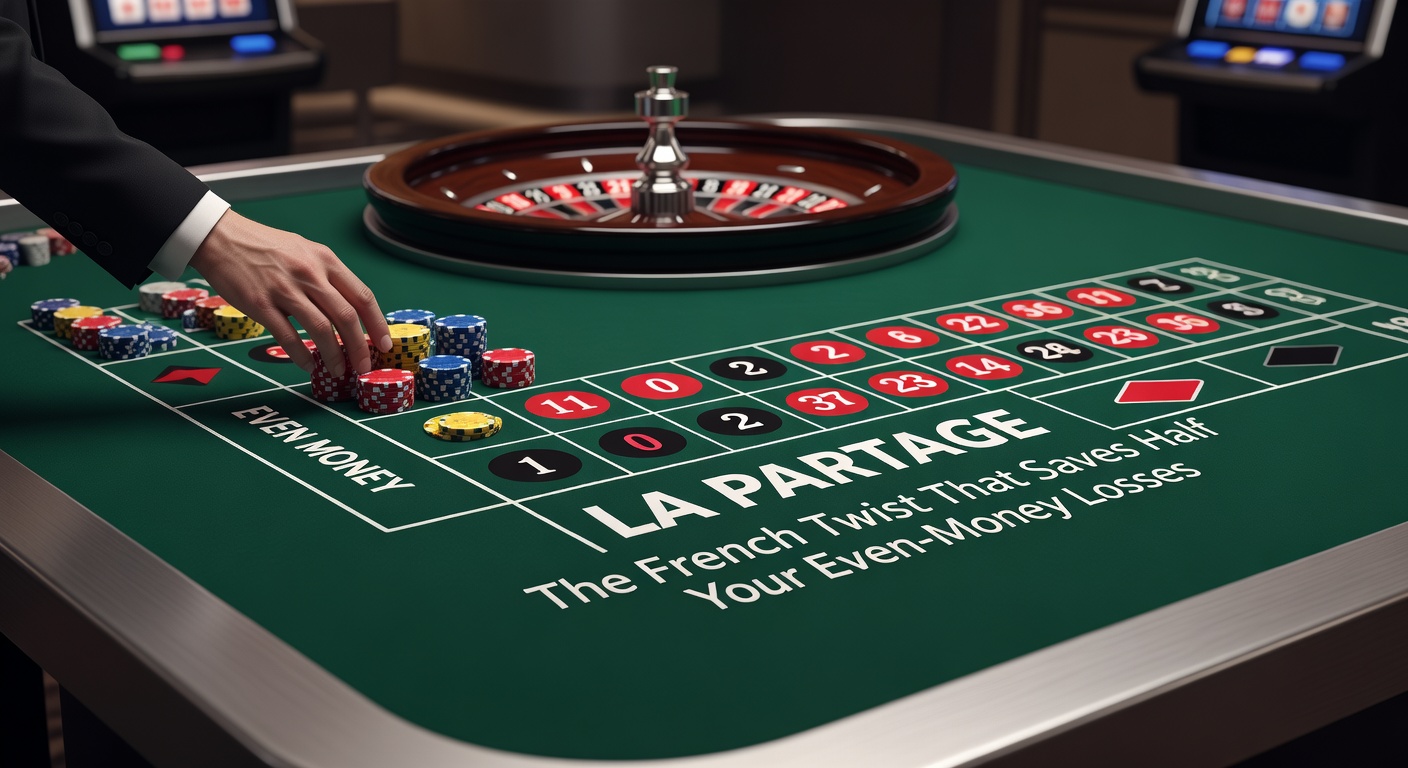
But here's the thing that trips up newcomers: La Partage and En Prison often get lumped together, yet they diverge sharply; En Prison, another French rule, imprisons even-money bets on zero, holding them for the next spin where they either double on win, release on even-money success, or vanish on zero again, creating suspense but risking full loss. Studies from the Nevada Gaming Control Board highlight how La Partage delivers immediate half-relief, appealing to conservative players, while En Prison tempts risk-takers with potential full recovery.
Data indicates both slash the house edge to 1.35% on even-money from the standard 2.7%, but La Partage edges out in simplicity, with no "imprisonment" delay; experts who've crunched thousands of spins observe players prefer it for steady play, especially in longer sessions where variance evens out. Whereas American Roulette's double zero balloons the edge to 5.26%, these French tweaks keep continental games competitive.
One case from Monte Carlo logs shows a table alternating rules nightly, revealing player migration toward La Partage tables during peak hours, underscoring its draw without needing fanfare.
The Mathematical Edge: Why It Matters
Numbers don't lie in roulette, and La Partage reshapes them profoundly: on a single-zero wheel, 37 pockets mean even-money bets cover 18 each, facing 1/37 zero odds; without the rule, house edge hits 2.7%, but with half-back, it drops to 1.35%, as confirmed by probability models from gaming mathematicians. Figures reveal this halves expected losses over time, turning a €1000 session's theoretical drain from €27 to €13.50, a boon for volume players.
Turns out, this edge reduction shines in simulations; researchers running million-spin trials find variance smooths faster under La Partage, helping bankrolls endure hot and cold streaks alike. And while inside bets retain the full 2.7% edge, even-money grinders flock here, building strategies around sustained play rather than high-variance hunts.
It's noteworthy that as of April 2026, Australian regulators via the Australian Gambling Research Centre reports emphasize such rules in online exports, noting their role in promoting responsible gaming by curbing rapid depletion.
Where Players Encounter La Partage Today
France remains ground zero, with casinos in Deauville, Enghien-les-Bains, and Nice mandating La Partage on all tables per national law; across borders, Monaco's venues uphold it religiously, while select spots in Belgium and Switzerland offer it alongside En Prison hybrids. Online, platforms licensed in Malta or Gibraltar feature French Roulette lobbies prominently, with live dealer streams from Riga or Bucharest studios applying the rule in real-time.
Yet, U.S. floors rarely embrace it—Vegas sticks to double-zero dominance—though some Atlantic City tables experimented briefly before reverting; data from industry trackers shows European tourists seek it out, boosting international draw. So, for April 2026 travelers, Paris or Monte Carlo tables promise authentic encounters, especially with post-pandemic surges in high-limit French Roulette.
People who've scoured apps often land on operators like those audited by the Alderney Gambling Control Commission, where La Partage variants proliferate, blending mobile convenience with traditional equity.
Player Strategies and Real-World Examples
Seasoned grinders layer La Partage into flat-betting systems, wagering consistently on red or black to leverage the 1.35% edge, knowing half-backs blunt zero's punch; one observer chronicling Macau sessions (pre-rule adoption there) recounts a European pro extending a €500 buy-in over 400 spins, crediting La Partage for nine half-refunds that preserved capital. That's where the rubber meets the road—pairing it with bankroll discipline yields marathon potential.
But strategies falter without grasp of limits; tables cap even-money at thousands, so progressions like Martingale demand caution, as consecutive zeros (rare at 1/1369) still sting halved stakes. Experts who've modeled this advise short sessions, cashing wins early, since the ball's in chance's court ultimately.
There's this case from a 2025 Lyon tournament where La Partage fueled a comeback: a player down €2000 clawed back via even-money chains, half-backs providing nine lives amid zeros, highlighting its clutch role without overpromising.
Conclusion
La Partage endures as roulette's elegant equalizer, trimming even-money losses precisely when zero strikes, fostering fairer play across French tables and digital realms; data underscores its 1.35% edge boon, while history cements its place in gaming lore. Players chasing sustainability gravitate here, blending thrill with tempered math, and as April 2026 unfolds with expanded online reach, its appeal shows no signs of fading—offering that French twist where half a loss feels like a win in disguise.